
Have you ever enrolled your child, at some point, in Qur’an memorization circles at the local Islamic center in the town where you live?
Most likely, you’ve gone through this experience. At the beginning, everything is filled with enthusiasm. But after days and weeks pass, your child starts missing sessions—sometimes attending regularly, other times dropping out. After a long while, you notice that your child has memorized a surah here, an ayah there, then begins another ayah from a different surah… only to stop for a long period and forget most of what they memorized before.
This is not your problem alone. It is a common challenge faced by many expatriate families living abroad with their children.
But do you know how this inconsistency and fragmentation affect your child?
Intermittent learning—whether through irregular attendance at weekly Qur’an sessions or randomly watching online videos every now and then—has a significant impact. No matter how qualified the teacher is or how good the lessons may be, over time your child begins to sense a lack of seriousness and importance. As a result, they lose the feeling of connection and commitment, and they may face two major problems:
- Weak retention of Qur’anic verses:
Memorization without daily repetition does not settle firmly in a child’s memory. You may find that your child memorizes a short surah today, then forgets it a week later. - Weak pronunciation and forgetting how to read words correctly:
Intermittent memorization does not give the child enough opportunity to تثبيت makhārij al-ḥurūf (proper articulation points) or practice correct pronunciation. With a lack of follow-up, repetition, and a supportive Arabic and Qur’anic environment, mistakes become ingrained in the child’s mind and tongue.
Unfortunately, as a parent, you may eventually realize that the effort invested has not borne fruit—that your child has not truly progressed, but is instead repeating the same level over and over again.
The Solution: Consistency and Continuous Follow-Up
The Prophet ﷺ said:
“The most beloved deeds to Allah are those that are consistent, even if small.”
(Narrated by Al-Bukhari and Muslim)
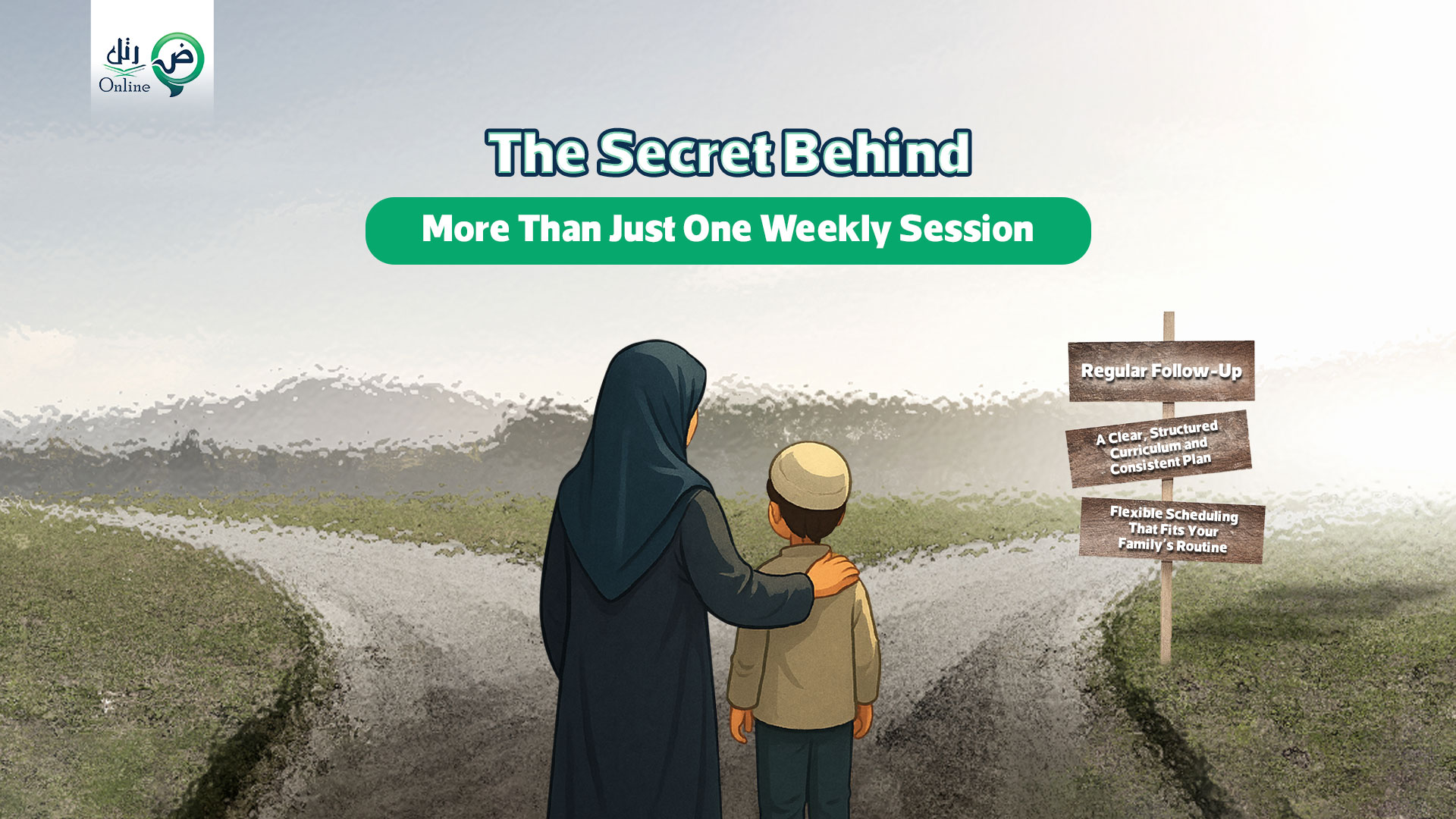
From this hadith, we understand that if you want your child to memorize the Qur’an, consistency is essential. It is the primary factor for achieving any goal. Committing to a regular, flexible, and continuous learning plan—more than once a week—helps your child to:
- Memorize and firmly retain verses:
When Qur’anic recitation is repeated daily and heard frequently, it becomes a natural part of the child’s daily routine, greatly reducing the chance of forgetting. - Increase the child’s motivation:
Daily repetition helps your child memorize faster. As verses become firmly established, the child feels a sense of achievement, which boosts confidence. Memorization then becomes easier and more enjoyable, rather than a heavy burden caused by receiving large amounts of new material all at once. - Improve pronunciation:
Continuous repetition and regular correction by the teacher prevent the accumulation of errors and significantly improve accuracy and clarity of recitation.
How Does Rattil School Organize a Qur’an Memorization Plan That Keeps Children Connected to the Qur’an in a Simple Way?
At Rattil School, we understand that intermittent learning—especially for children living abroad in non-Arabic-speaking environments—is extremely challenging. That’s why we designed our programs to address these exact challenges through:
- A clear, progressive curriculum that starts with learning Arabic letters, then moves to repetition and memorization of verses at a pace suitable for each child, along with simplified Tajweed instruction.
- One-on-one sessions or small groups, ensuring that each child’s voice is heard, direct communication with the teacher is established, and the child feels valued and respected.
- A safe and encouraging environment, free from scolding or comparison. Our approach is based on positive education, encouragement, and motivation—so the Qur’an remains associated with love, not pressure or coercion.
- Flexible scheduling that fits your family’s commitments and aligns with your daily routine.
In Conclusion
Dear reader, teaching the Qur’an to children is neither a rigid race with strict rules nor a task reserved only for weekends. It is a short but consistent daily journey. Time alone is not the decisive factor in Qur’an memorization or in the quality of pronunciation—consistency is.
 Register your child now for a free trial session, and take the first step toward building a steady and deep relationship between your child and the Qur’an.