

The goal of the Islamic studies program.

“Our students learn the true essence of their religion, follow the righteous path of the true faith, and strengthen Islamic belief within their hearts. We aim to instill religious knowledge into their conscience using a gentle, simple approach that aligns with their culture and resonates within their souls.”


The intended audience for the Islamic studies program.

1- The youth / Small children.
2- Adult levels.

Get two free classes.

Leave your details below, and our team will contact you via WhatsApp to schedule your free trial appointment.

Our approach to teaching Islamic sciences can be summarized in the following points:

1- We have prepared age-appropriate books, important topics, and teaching styles for each age group.

Phase 1: The Youth level.

In this stage, the focus is on: introducing the student to the fundamentals of religion and the pillars of Islam, as well as instilling the correct Islamic creed in the child's heart. This is intended to raise the child in a sound manner, growing their knowledge of the basic constants of the religion that they must know at a young age to protect them from falling into errors when they grow up.

Phase 2: Adult levels and post-childhood stages.

In this stage, we focus on explaining various religious sciences, including Quranic interpretation, Islamic jurisprudence (Fiqh), Prophetic traditions (Hadith), the biography of the Prophet (peace be upon him), stories of the prophets, and the lives of the noble companions. This is provided alongside Islamic creed, aiming to draw our students toward the garden of Prophethood and the knowledge of their religion's teachings, while fostering their sense of belonging to the faith and cultivating love for it in their hearts.

2- We do not limit ourselves to explaining the sciences of Sharia; we have also prepared a practical, applied side to teach our students everything they need to learn at the core of the religion, such as:

a- Teaching children how to perform Wudu (ablution) correctly.
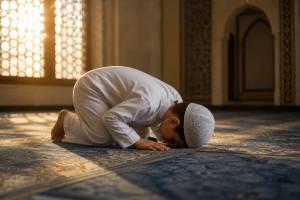
b- Teaching the student the pillars of prayer (Salah), how to perform it, and the requirements for its execution.

b- Teaching the student the pillars of prayer (Salah), how to perform it, and the requirements for its execution.
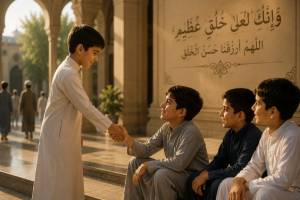

d- Helping the student grasp the manners they must adhere to, and the ethics they must follow to gain acceptance and pleasure from God, as well as how to apply these in their daily interactions.

3- Our curricula are taught by a group of skilled teachers (male and female) who specialize in this field.

4- We are honored even further: that our students across the world become an essential part of the rays of light that illuminate societies everywhere on God’s earth. And praise be to God alone.