
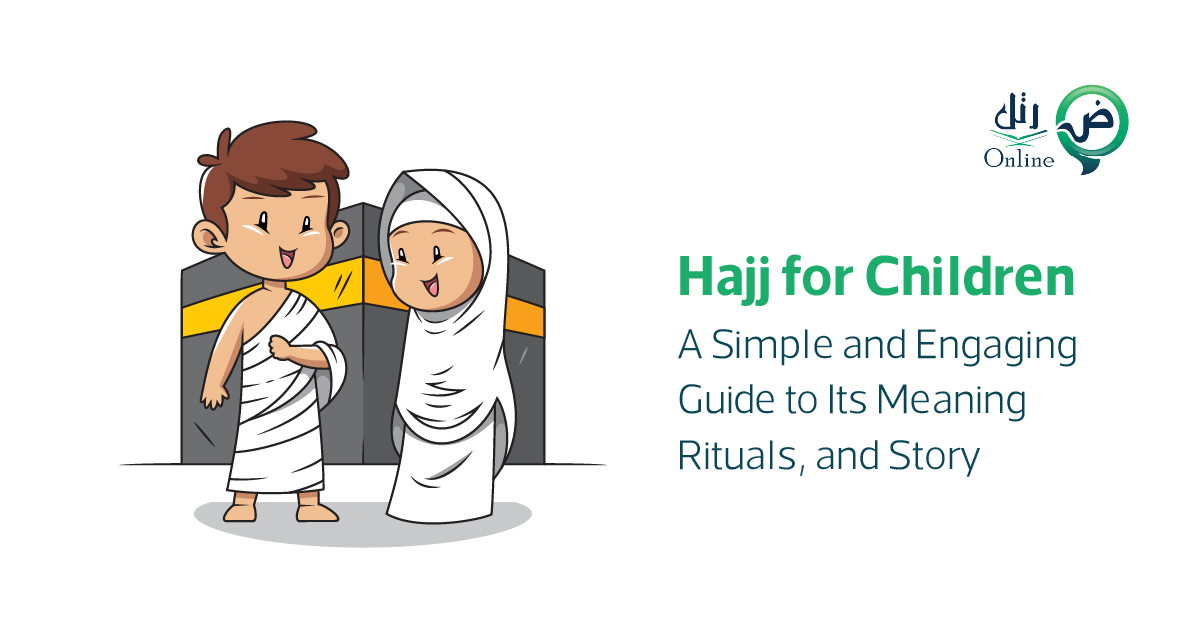
Only a few days remain until the season of Hajj—one of the greatest acts of worship in Islam, where Muslims from all over the world gather in Mecca to perform the fifth pillar of Islam. As this blessed time approaches, many Muslim families living abroad feel a growing need to explain Hajj to their children in a way that is simple, meaningful, and engaging—helping them understand its purpose, learn its key rituals, and connect with its powerful story.
That’s why this guide offers practical steps to help you teach your child about Hajj in a clear and inspiring way.
1. Start with the Meaning of Hajj (Before the Details)
Before explaining the rituals of Hajj, begin with the core idea:
Hajj is a special act of worship that Allah has commanded for Muslims who can perform it. It is an act of obedience, faith, and devotion.
Children need to understand that Hajj is not a vacation—it is a spiritual journey with a specific time and place.
You can explain it simply like this:
“Hajj means that Muslims travel to Mecca during the month of Dhul-Hijjah to worship Allah and follow the footsteps of Prophet Ibrahim and Prophet Muhammad (peace be upon them).”
2. Connect Hajj to a Story Children Love
Children learn best through stories. One of the most effective ways to teach Hajj is through the story of:
- Prophet Ibrahim (Abraham)
- Hajar (his wife)
- Prophet Ismail (Ishmael)
Tell them how Allah turned the desert of Mecca into a place visited by people from all over the world, as mentioned in the Qur’an.
When a child understands that the Kaaba is not just a building, but a symbol of faith, patience, and trust in Allah, Hajj becomes much more meaningful than just a set of rituals.
3. Teach the Main Rituals in a Simple Way
Children don’t need to learn all the detailed rulings at once. Focus on the main steps of Hajj in a way that matches their age:
You can explain that a pilgrim in Mecca:
- Wears Ihram (special simple clothing) and makes the intention for Hajj
- Stands at Arafat on the 9th day of Dhul-Hijjah (the most important part of Hajj)
- Performs Tawaf (walking around the Kaaba)
- Performs Sa’i (walking between Safa and Marwa)
At this stage, what matters most is that the child understands these acts are all about remembering Allah, obeying Him, and following the Prophet (peace be upon him).
4. Let Your Child Experience Hajj (Not Just Hear About It)
Children learn better through experience than through theory. Try to make Hajj come alive at home with simple activities:
- Build a small model of the Kaaba using cardboard
- Watch videos or pictures of pilgrims and the Kaaba
- Act out Tawaf and Sa’i at home
- Repeat the Talbiyah together: “Labbayk Allahumma Labbayk”
Why Is Teaching Hajj Especially Important for Children Abroad?
In many Muslim countries, children grow up surrounded by the atmosphere of Hajj—seeing pilgrims, hearing Takbeer and Talbiyah, fasting on the Day of Arafah, and preparing for Eid al-Adha.
But in Europe and America, these spiritual surroundings are often missing.
That’s why parents play a crucial role in helping their children:
- Understand Hajj beyond just its name
- Feel connected to their Islamic identity
- Learn the values of obedience, faith, and submission to Allah
Teaching Faith with Love Matters
Faith-based concepts are deep and meaningful, and children need them to be presented in a warm, age-appropriate, and engaging way.
When taught with love, children don’t just understand Islam—they grow attached to it.
Frequently Asked Questions (FAQ)
What is the difference between Hajj and Umrah?
You can explain it simply:
- Hajj is one of the five pillars of Islam and must be performed at a specific time (Dhul-Hijjah).
- Umrah can be performed at any time of the year.
Both take place in Mecca, but Hajj includes more rituals and is more comprehensive.
What is the connection between Hajj and the sacrifice (Eid al-Adha)?
It relates to the story of Prophet Ibrahim, who was willing to sacrifice his son Ismail in obedience to Allah. When they both submitted to Allah’s command, Allah replaced Ismail with a العظيم sacrifice.
This story teaches children the meaning of obedience and trust in Allah.
What is the right age to teach children about Hajj?
You can start at a very young age:
- Younger children learn through stories, play, and visuals
- Older children can understand deeper meanings and rituals with guidance
REFERENCES:
https://muslimkidsactivities.com/hajj-for-kids-what-you-should-teach-your-children-about-hajj/