
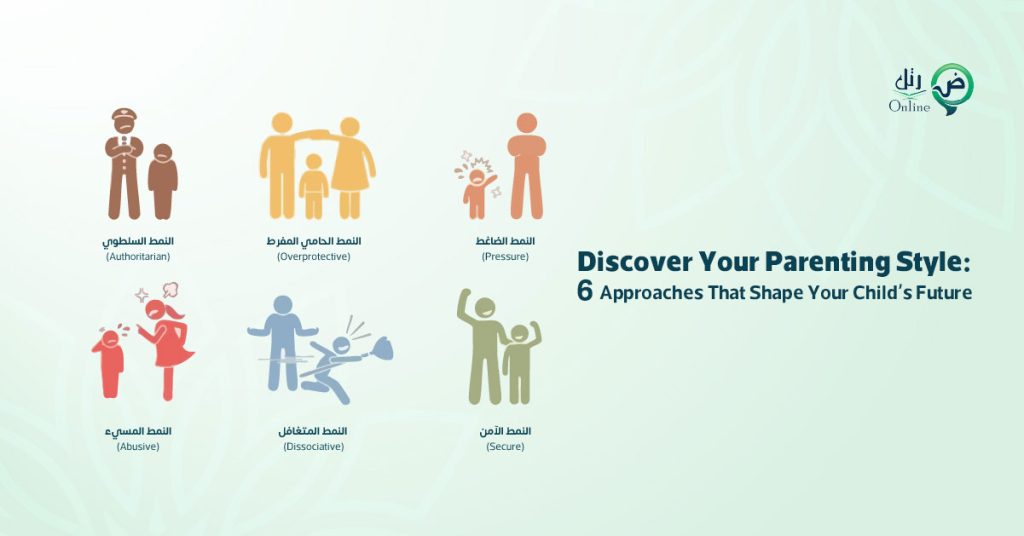
Discover Your Parenting Style: 6 Approaches That Shape Your Child’s Future Parenting is the cornerstone of shaping children’s personalities and their psychological and social well-being. But have you ever asked yourself: What is my parenting style? And does it support my child’s growth, or does it hinder it? Educational psychology identifies six core parenting styles, each differing in how parents interact with their children and in the impact they have. In this article, we will explore these styles, how to recognize your own, and—most importantly—how to develop it into a healthy parenting approach that helps your child grow with happiness and confidence.

1. Authoritarian Parenting Style (Authoritarian)

How do you know you use this style?
  • You impose strict rules without explanations.
  • You closely monitor your child and demand full compliance.
  • You tend not to show enough affection or warmth.
  • Your approach is often accompanied by fear of punishment or harsh reactions.
How can you develop your approach?
  • Try to explain to your child why rules exist, and sometimes involve them in setting those rules.
  • Show love and affection regularly.
  • Maintain firm guidance without threats or humiliation.
  • Listen to your child’s opinions and try to understand their fears and emotions.

2. Overprotective Parenting Style (Overprotective)

How do you know you use this style?
  • You express excessive love without giving your child the chance to make mistakes or learn from experience.
  • You refuse to acknowledge any weakness or mistake in your child and treat them as if they are perfect.
  • You control every detail of their life out of fear that they might be harmed.
How can you develop your approach?
  • Allow your child to feel confident that making mistakes is part of learning.
  • Give them space for independence and experimentation.
  • Use open dialogue to build deeper communication instead of control.
  • Reinforce positive values while accepting that limits and mistakes exist.

3. Pressure-Based Parenting Style (Pressure)

How do you know you use this style?
  • You live through your child and expect them to be perfect in everything.
  • You set extremely high standards for success and appearance.
  • You feel that your own success is tied to your child’s performance.
How can you develop your approach?
  • Focus on supporting effort rather than results alone.
  • Encourage your child to be the best version of themselves, not to please others.
  • Help them build self-confidence away from perfectionism pressures.
  • Give them space to express their feelings without fear of rejection.

4. Abusive Parenting Style (Abusive)

How do you know you use this style?
  • You frequently use physical or psychological punishment.
  • You harshly criticize your child or ignore their emotional needs.
  • You display negative emotions that may harm your child psychologically.
How can you develop your approach?
  • Seek psychological support if needed to learn healthy parenting methods.
  • Replace criticism with positive discipline and constructive guidance.
  • Learn how to remain calm even in difficult situations.
  • Focus on building a relationship based on love and mutual respect.

5. Neglectful Parenting Style (Dissociative)

How do you know you use this style?
  • You do not respond to your child’s emotional and social needs.
  • You show leniency in setting boundaries or enforcing guidance.
  • Your child lacks your emotional presence and support.
How can you develop your approach?
  • Make sure to dedicate daily time to interact with your child.
  • Learn how to express your emotions and help your child feel safe.
  • Set clear rules and be a role model in following them.
  • Engage in shared activities with your child to strengthen bonding.

6. Secure Parenting Style (Secure)

How do you know you use this style?
  • You combine firmness with warmth, set clear rules, and respect your child.
  • You respond to their emotional needs and build effective communication.
  • You balance granting independence with guiding your child toward success.
How can you develop your approach?
  • Continue strengthening the positive relationship through open dialogue.
  • Monitor conflict situations and reduce them through compromise.
  • Acknowledge your child’s achievements and reward them sincerely.
  • Seek professional support if you face specific challenges.

How can you identify your current parenting style?

Observe your behavior with your child in everyday situations and how you respond to their needs. Do you lean more toward firmness or affection? Toward control or freedom? Evaluate yourself honestly, and seek professional consultation if needed.

An Invitation to Develop Your Parenting Self

The Academy offers you and your child further support through specialized courses that help you to:
  • Understand modern, positive parenting approaches
  • Build a secure and productive relationship with your child
  • Develop communication and parental leadership skills
At Rattiel Academy, we provide you with practical tools to understand yourself as a parent and to build a more conscious and trusting relationship with your child. Enroll now in our specialized parenting programs and begin your transformation journey as a mother or father toward an approach that nurtures love, safety, and genuine connection.