
As a parent living abroad, you may work hard to give your child a safe home, a go school, and a bright future.
But in a quiet and honest moment, one question often remains in the heart:
Who will protect my child’s heart when the pressures of life abroad grow stronger?
And another important question follows:
Is relying only on the summer break enough to help our children memorize the Quran?
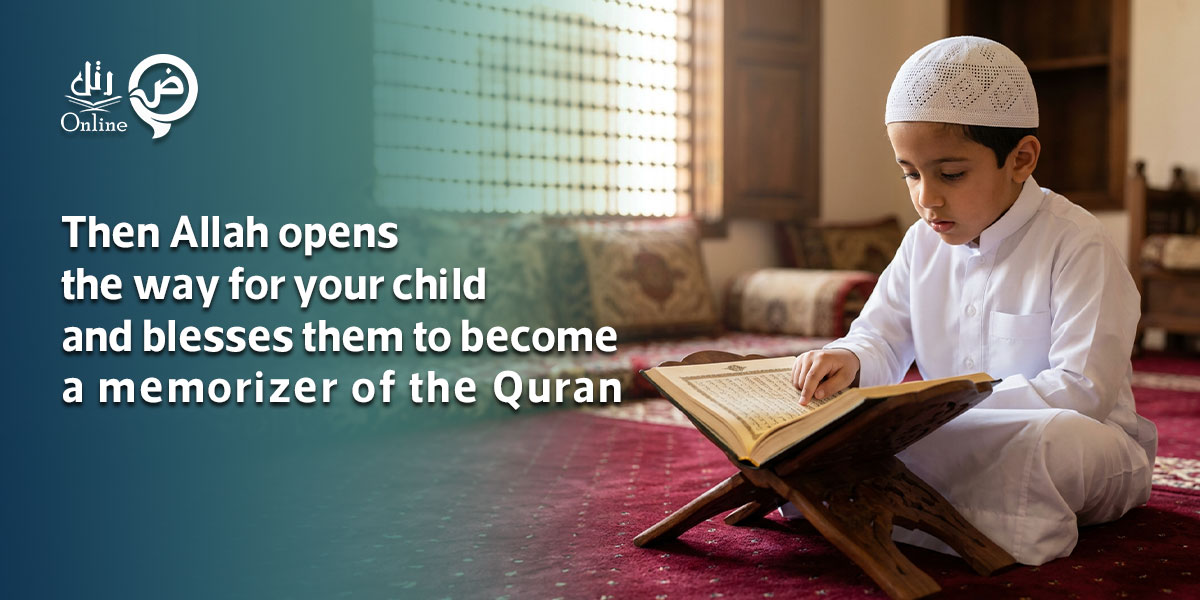
For Allah to open the way for your child and bless them to become a memorizer of the Quran is not something random. In many cases, it begins with the right environment, the right method, and steady support over time.
That is exactly what many Muslim families in Europe are searching for today.
First: Why Is Quran Memorization Important for Children in Europe?
Many parents wonder whether Quran memorization should remain a priority while raising children abroad.
Between school, social life, and cultural influences, many families are simply trying to help their children stay balanced and successful. Yet this is exactly why Quran memorization matters even more.
Helping children memorize the Quran is not only a religious goal. It is also a powerful way to strengthen their identity, character, emotional stability, and connection to Islam while growing up in a non-Muslim environment.
1. Strengthen memory and concentration
Children naturally learn through repetition, and memorizing Quranic verses helps train the mind to retain information more effectively. Over time, this often reflects positively on school performance, attention span, and learning ability.
For many children, the habit of memorization becomes a tool that improves not only their Quran journey but also the way they study and concentrate in daily life.
2. Building self-discipline
A child who attends regular Quran classes, reviews consistently, and follows a simple memorization routine gradually develops stronger self-discipline. They begin to understand commitment, responsibility, and the value of staying consistent even when motivation changes.
This is especially important for children growing up in Europe, where busy schedules can easily make Islamic learning feel secondary if it is not intentionally protected.
3. Boosts confidence and emotional stability
It’s deeply meaningful to watch your child complete a new surah and feel proud of what they have achieved.
When Quran memorization is taught through a gradual and realistic plan, children experience regular moments of achievement. These repeated moments build self-confidence and often give the child a deeper sense of emotional security and stability.
4. Strengthen Islamic identity
For Muslim children living abroad, identity is not always built automatically. It must often be nurtured with intention.
When Quran memorization is paired with simple explanation and meaningful teaching, the child begins to see the Quran as more than a text to repeat. It becomes a source of values, stories, guidance, and belonging.
Second: How Can Children Living Abroad Memorize the Quran Successfully?
In many homes across Europe, the challenge is not the desire to help children memorize the Quran.
The real challenge is continuity.
How can we do that?
Start small and build steadily
One of the most effective ways to begin is by starting with the shorter surahs in Juz’ Amma.
This helps the child feel early success without being overwhelmed. When a child sees progress quickly, their motivation naturally grows. Then, little by little, they can move forward into longer memorization while keeping strong revision habits in place.
Short sessions are often more effective than long ones
A 20 to 30-minute online Quran class is often more productive than an hour-long lesson that overwhelms the child.
This is especially true for young learners and for children managing school and life in Europe.
Use repetition in a smart and engaging way
When the learning process includes listening, repeating aloud, guided correction, visual cues, and interaction with a teacher, memorization becomes much easier and more enjoyable.
This helps the child feel that Quran learning is a meaningful journey they are capable of continuing.
Personalized support makes a real difference
When a child feels that their teacher knows them, understands their pace, and celebrates their progress, the experience changes completely. Memorization becomes a relationship built on trust, encouragement, and spiritual growth.
READ MORE: When Memorization Comes Without Understanding… Are We Truly Succeeding in Teaching the Qur’an?
Third: How Can Parents Support Quran Memorization at Home?
Many parents feel that they want to help, but they are unsure how to fit Quran memorization into everyday life.
The good news is that success does not require a perfect schedule.
It requires a simple and consistent one.
Even ten or fifteen minutes a day can make a meaningful difference when done regularly.
Parents can also support memorization by encouraging effort instead of focusing only on mistakes. A child who feels constantly corrected may lose motivation, while a child who feels seen and encouraged is far more likely to continue.
And perhaps most importantly, Quran memorization should feel like a personal journey of closeness to Allah, growth, and love.
Fourth: Supporting the Quran Memorization Journey with Expert Guidance
When you do not want to walk this path alone…
Sometimes parents genuinely want to guide their child in memorizing the Quran, but they also know they need structured help.
That is where online Quran classes for kids can make a major difference.
At Rattel School, our online Quran programs are designed specifically for Muslim children growing up abroad.
They combine:
- Flexible scheduling for busy families
- Interactive teaching methods suited to children
- Individual follow-up based on each child’s level
- A safe Islamic learning environment
- Simple explanation of meanings to build understanding, not only memorization
Because the goal is not only for your child to memorize the Quran.
The goal is for them to build a lifelong relationship with it.
And then, by Allah’s grace, He opens the way for your child and blesses them to become a memorizer of the Quran.
Enroll now in Rattel School’s interactive online Quran program and help your child begin their Quran memorization journey with confidence, consistency, and love.
References: