
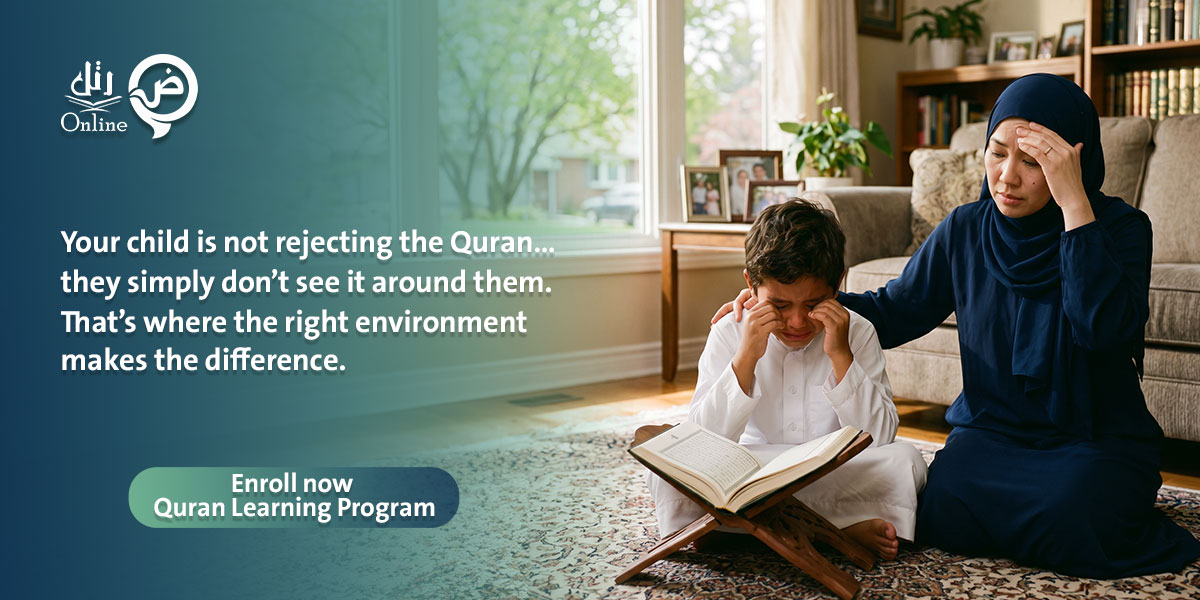
Every time your child opens the Mushaf, you sit beside them with the best intention in your heart:
“I want them to learn correctly.”
Then they start reading.
They pause for a moment… hesitate… make a mistake. And before they can finish the word, the sentence comes out automatically:
“No… not like that.”
So they try again, and make another mistake.
“Focus… say it correctly.”
After a few minutes, they quietly close the Mushaf — or sometimes, they do it with frustration.and here comes the question we rarely say out loud:
Am I helping my child… or am I pressuring them?
Children Are Not Afraid of Mistakes… They Are Afraid of How Mistakes Feel
In the adult world, correction is normal But in a child’s world, it feels completely different.
A child does not always see a mistake as information that needs to be fixed.
They may feel it as:
embarrassment, failure, or a loss of confidence.
This is especially true when teaching children Quran recitation, where the language is not always easy for them — particularly for children living abroad.
When a child is interrupted constantly, their mindset shifts from:
“I am learning”
to: “I must not make a mistake.” and this is the most dangerous shift.
So When Does Correction Become a Problem?
Correction itself is not wrong.The problem is in the way it is done — and the timing.
Correction becomes harmful when:
 We interrupt the child at every word We raise our tone without realizing
We show frustration when they make a mistake We focus more on mistakes than attempts
At that point, the child no longer hears the verses They hear the tension.
There Is a Big Difference Between a Child Who Is Learning… and a Child Who Feels Tested
The first child reads while feeling safe.The second child reads while expecting correction at any moment.
The first child makes mistakes, learns, continues reading, and gains confidence.
The second child hesitates, stops often, dislikes the session, and with time, may begin avoiding recitation altogether.
So When Should We Correct… and When Should We Stay Silent?
This is one of the most important parenting skills.
Correct immediately if:
the mistake clearly changes the meaning, or the same mistake is repeated often.
Let the child continue if:
the mistake is simple, especially at the beginning of their learning journey.
At this stage, the child needs to complete the recitation with confidence.Then you can return to the correction calmly after they finish.
Tone Matters More Than the Word Itself
Saying “That’s not correct” in a calm tone is completely different from saying it with tension.
A child does not only hear the word.
They feel it.
When teaching Quran to children living abroad, the child is already facing the challenge of language.
So it is better not to add the challenge of fear.
What Does a Child Really Need During Recitation?
We are not looking for perfection. we are looking for what the child truly needs:
To feel safe To be allowed to make mistakes
To be encouraged more than corrected
Sometimes, one simple sentence like: “Very good… keep going”
can make a bigger difference than ten corrections.
How Does Ratel Handle Correction?
At Rattiel School, correction is part of the learning experience, but it is not the center of it.
The teacher does not interrupt the child at every mistake The child is given space to try Encouragement comes before correction Correction is done calmly and constructively
Because the goal is not only for the child to read correctly.The goal is for the child to read while feeling comfortable.
In the End…
Your child does not need you to be a “corrector.”They need you to be a partner in learning.
And every time you choose patience instead of interruption, you are not only teaching them how to read.you are teaching them that the Quran is a safe place.
And if you are looking for an environment that supports your child without pressure, a free trial class with Ratel School may be a completely different beginning.