
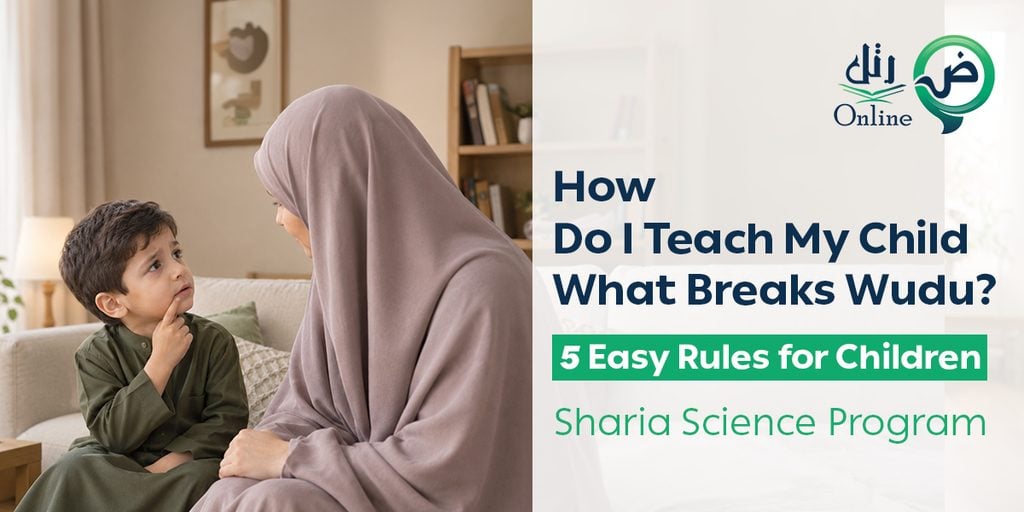
During a gathering of Muslim mothers, the conversation turned to a new stage their children were going through: learning wudu and its rules.
The children had many questions on their minds:
“Mom, do I need to make wudu again for every prayer?”
“Mom, something came out of me. Does that mean I no longer have wudu?”
“I fell asleep a little while ago. Did my wudu break?”
At this stage, a child may become very sensitive about the idea of losing wudu and start thinking that every movement or touch means they need to make wudu again.
Often, the real problem is that the child does not have one simple, clear rule that helps
them know: When do I need to make wudu again?
That is why we have gathered 5 easy rules in this guide that you can teach your child .
What Does “What Breaks Wudu” Mean for Children?
The things that break wudu are certain actions that mean a person is no longer in a state of wudu and needs to make wudu again before praying.
Why Does Wudu Topic Confuse Children?
Children like clear rules: yes or no, right or wrong.
So when a child hears different information about wudu without one clear rule, they may start doubting again: Did this touch break my wudu? Does what just happened mean I need to make wudu again?
It can become even more confusing when we use words like ritual impurity, breaking wudu, certainty, doubt, and other terms.
At this stage, it is better to keep the rules limited, use simple language, and connect them to situations your child already knows from daily life.
If your child is still at the beginning of learning about taharah, we recommend starting first with this article:
How Do I Teach My Child the Rules of Taharah? 4 Easy Steps
5 Rules That Help Your Child Know When to Make Wudu Again
- Used the Bathroom? Make Wudu Again
This is one of the easiest rules for a child to remember:
“If you use the bathroom to relieve yourself, make wudu again before prayer.”
Passing urine or stool breaks wudu. Allah mentions relieving oneself in the verse about purification:
﴿أَوْ جَاءَ أَحَدٌ مِنْكُمْ مِنَ الْغَائِطِ﴾ Surah Al-Ma’idah: 6 - Passed Wind? Make Wudu Again
This is one of the rules that often makes children laugh when they first learn it, and that is okay. Sometimes the information that makes them laugh is the information they remember for the longest time.
Simply tell your child: “If you pass wind, you need to make wudu again.”
Even if you cannot see anything. - Slept Deeply? Make Wudu When You Wake Up
You can simply tell your child: “If you take an afternoon nap or go to bed and fall into a deep sleep, make wudu again when you wake up for prayer.”- Touched Something Impure? You Do Not Need New Wudu. Just Wash It
This is one of the points that needs extra attention with children. Why?
Because if your child touches urine, or impurity such as blood or urine gets on their clothes, they may immediately think their wudu is no longer valid.
- Touched Something Impure? You Do Not Need New Wudu. Just Wash It
For example, if a child gets a baby’s urine on their hand, they should wash the affected area well. They do not need to repeat wudu just because they touched it, unless something else happened that actually breaks wudu.
A simple rule they can remember:
“Got something impure on you? Just wash that spot.”
5. Not Sure? Doubt Alone Does Not Break Wudu
Your child makes wudu, then a few minutes later says:
“Mom, I’m not sure. I’ll make wudu again just to be safe.”
To reassure your child, we can use a story from the time of the Prophet ﷺ.
A man complained to the Prophet ﷺ that he felt something during prayer but was not sure whether anything had actually come out. The Prophet ﷺ told him not to leave his prayer until he was certain, saying:
“He should not leave until he hears a sound or finds a smell.”
Narrated by Al-Bukhari and Muslim.
Children need to understand from the beginning that worship is not meant to become a source of anxiety. Allah has made this religion based on ease and clarity.
Because We Support You in Your Child’s Journey of Faith
In Rattiel’s Islamic Studies Program, children learn the rules of taharah, prayer, and other Islamic teachings in a way that suits their age and language, with teachers who help them understand what they learn and apply it in everyday life.
Book two free trial lessons for your child and let them begin their journey of learning Islam in a way they can understand and love.