
It starts before understanding
Many mothers think a child’s relationship with the Qur’an begins only once they can sit still and learn. In truth, that relationship can begin before the child understands a single word.
In their early years, children learn from the world around them: what they hear, what they see, and what they live every day. So there is no need to wait for a certain age before bringing the Qur’an into our children’s lives. It doesn’t have to be a formal lesson, and we don’t need to ask the child to understand everything they hear.
We simply need to make the Qur’an present in the details of their day, in a natural and loving way.
1. Make the sound of the Qur’an familiar at home
One of the simplest ways is to let your child hear the Qur’an at different times of the day. You might listen to a short surah while sitting together, during a car ride, or in a quiet moment before bed.
With repetition, the sound of the Qur’an becomes familiar to the child and linked to their home, their family, and the happy moments they share together.
Allah says:
﴿وَإِذَا قُرِئَ الْقُرْآنُ فَاسْتَمِعُوا لَهُ وَأَنصِتُوا لَعَلَّكُمْ تُرْحَمُونَ﴾
“So when the Qur’an is recited, then listen to it and pay attention that you may receive mercy.” [Al-A’raf: 204]
The goal here is not to test the child on what they heard, but to give them the chance to listen to the Qur’an in a calm and loving environment.
2. Let your child see you reading the Qur’an
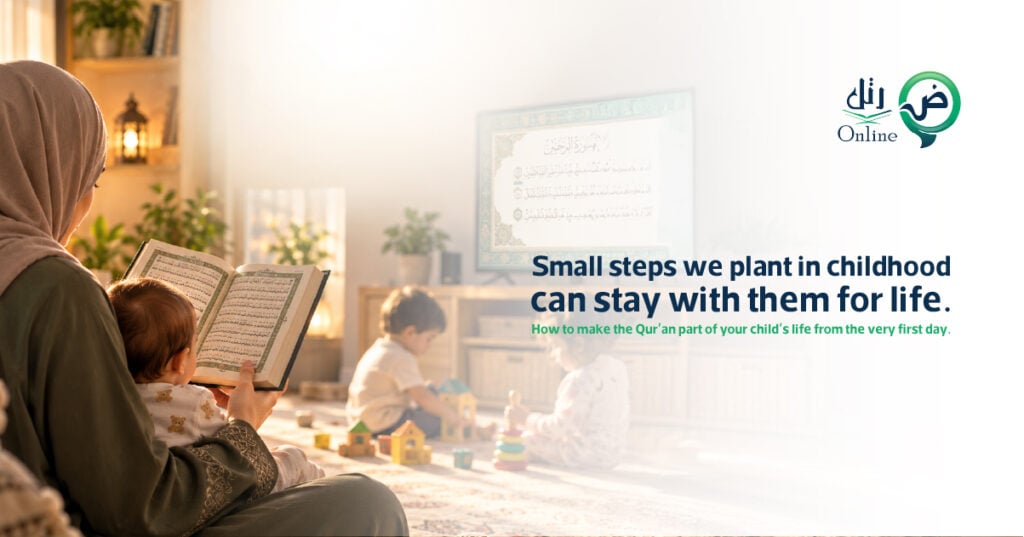
Children learn by watching before they learn by being told. When a child sees their mother or father open the mushaf and read quietly, they learn something bigger than the words themselves: that the Qur’an matters in our lives.
Set aside a time each day to read the Qur’an in front of your child, even if only for a few minutes. You don’t need to ask them to sit beside you every time. Simply seeing this habit again and again helps fix the idea in their mind that the Qur’an is a natural part of life.
3. Talk to them about the Qur’an in a way that suits their age
A young child doesn’t need a long explanation. You can say things like:
- “This is Surat al-Fatihah.”
- “Listen to the reciter’s voice.”
- “Did you like that surah?”
- “This verse is about Allah’s mercy.”
As they grow, you can add more explanation little by little. The idea is for the child to feel that the Qur’an is a book they can understand and come close to, not a set of words unrelated to their life.
4. Connect the Qur’an to everyday situations
This is one of the loveliest ways to make the Qur’an present in a child’s life.
When you talk about mercy, you can remind them of a fitting verse or Qur’anic story. When they make a mistake and apologize, talk with them about the value of honesty and repentance. When they help someone, point to the value of doing good.
This way, the child begins to realize that the Qur’an is not something we only hear at set times. It can accompany us in how we treat ourselves and other people.
Allah says:
“Indeed, this Qur’an guides to that which is most suitable.” [Al-Isra’: 9]
5. Create simple family rituals around the Qur’an
There’s no need for a long session every day. You might set a fixed time each week to read a surah together, such as Surat al-Kahf on Fridays, listen to a story from the Qur’an, or talk about the meaning of a verse in a way that suits your children’s ages.
What matters is consistency and simplicity. A small habit that repeats can become a natural part of a child’s life.
Don’t wait for the “right time”
There is no time too early for a family to make the Qur’an part of their child’s life. It can start with a sound the child hears at home, a mushaf they see in their parents’ hands, a story before bed, or a moment of parenting that teaches them a Qur’anic meaning. Then this relationship grows with them year after year.
Instead of asking, “When should we start with our child?”, perhaps the better question is: “How can we make the Qur’an present in their life starting now?”
This beginning doesn’t need much time or many tools. It needs a family that makes the Qur’an part of its own life first.
Start today — the small steps we plant in childhood can stay with them for life.
It starts before understanding
Many mothers think a child’s relationship with the Qur’an begins only once they can sit still and learn. In truth, that relationship can begin before the child understands a single word.
In their early years, children learn from the world around them: what they hear, what they see, and what they live every day. So there is no need to wait for a certain age before bringing the Qur’an into our children’s lives. It doesn’t have to be a formal lesson, and we don’t need to ask the child to understand everything they hear.
We simply need to make the Qur’an present in the details of their day, in a natural and loving way.
1. Make the sound of the Qur’an familiar at home
One of the simplest ways is to let your child hear the Qur’an at different times of the day. You might listen to a short surah while sitting together, during a car ride, or in a quiet moment before bed.
With repetition, the sound of the Qur’an becomes familiar to the child and linked to their home, their family, and the happy moments they share together.
Allah says:
(وَإِذَا قُرِئَ الْقُرْآنُ فَاسْتَمِعُوا لَهُ وَأَنصِتُوا لَعَلَّكُمْ تُرْحَمُون )
“So when the Qur’an is recited, then listen to it and pay attention that you may receive mercy.” [Al-A’raf: 204]
The goal here is not to test the child on what they heard, but to give them the chance to listen to the Qur’an in a calm and loving environment.
2. Let your child see you reading the Qur’an
Children learn by watching before they learn by being told. When a child sees their mother or father open the mushaf and read quietly, they learn something bigger than the words themselves: that the Qur’an matters in our lives.
Set aside a time each day to read the Qur’an in front of your child, even if only for a few minutes. You don’t need to ask them to sit beside you every time. Simply seeing this habit again and again helps fix the idea in their mind that the Qur’an is a natural part of life.
3. Talk to them about the Qur’an in a way that suits their age
A young child doesn’t need a long explanation. You can say things like:
- “This is Surat al-Fatihah.”
- “Listen to the reciter’s voice.”
- “Did you like that surah?”
- “This verse is about Allah’s mercy.”
As they grow, you can add more explanation little by little. The idea is for the child to feel that the Qur’an is a book they can understand and come close to, not a set of words unrelated to their life.
4. Connect the Qur’an to everyday situations
This is one of the loveliest ways to make the Qur’an present in a child’s life.
When you talk about mercy, you can remind them of a fitting verse or Qur’anic story. When they make a mistake and apologize, talk with them about the value of honesty and repentance. When they help someone, point to the value of doing good.
This way, the child begins to realize that the Qur’an is not something we only hear at set times. It can accompany us in how we treat ourselves and other people.
Allah says:
“Indeed, this Qur’an guides to that which is most suitable.” [Al-Isra’: 9]
5. Create simple family rituals around the Qur’an
There’s no need for a long session every day. You might set a fixed time each week to read a surah together, such as Surat al-Kahf on Fridays, listen to a story from the Qur’an, or talk about the meaning of a verse in a way that suits your children’s ages.
What matters is consistency and simplicity. A small habit that repeats can become a natural part of a child’s life.
Don’t wait for the “right time”
There is no time too early for a family to make the Qur’an part of their child’s life. It can start with a sound the child hears at home, a mushaf they see in their parents’ hands, a story before bed, or a moment of parenting that teaches them a Qur’anic meaning. Then this relationship grows with them year after year.
Instead of asking, “When should we start with our child?”, perhaps the better question is: “How can we make the Qur’an present in their life starting now?”
This beginning doesn’t need much time or many tools. It needs a family that makes the Qur’an part of its own life first.
Start today — the small steps we plant in childhood can stay with them for life.