
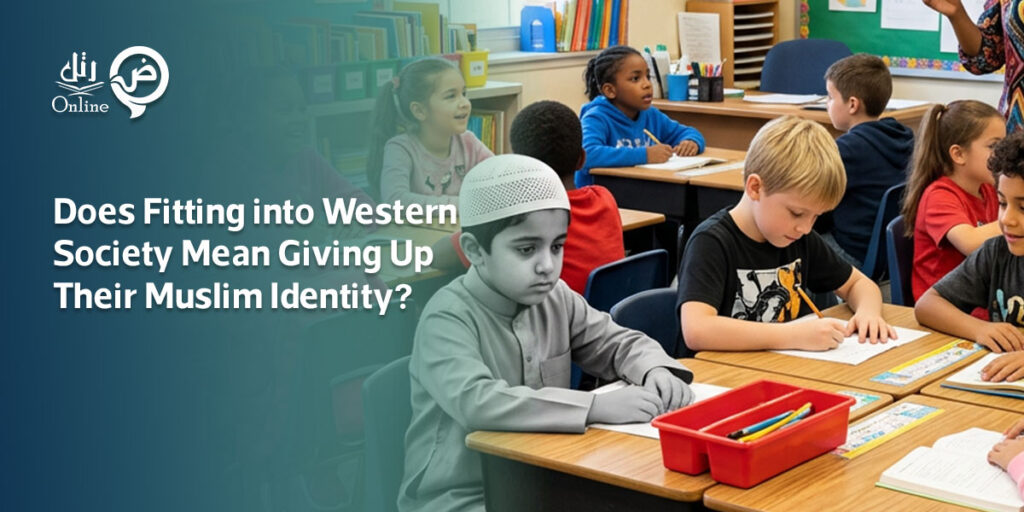
One day, your child may come home from school and talk about their friends, ask you a question you never expected, or tell you they feel different from the other children.
That is when the worries begin. Will they feel at home in the society around them?
Will its values and way of life change them?
Can they be part of it without losing their Islamic identity?
Many Muslim parents raising children in Western countries ask themselves these questions.
You want your child to be confident, make friends, and feel like they belong. But you also worry that fitting in might come at the cost of their faith and values.
That fear can push some parents to limit their child’s contact with the outside world or keep them away from anything that might influence them.
Other parents may feel that their child needs to slowly give up some of their values to be accepted and avoid feeling different.
But does your child really have to choose between staying true to Islam and fitting into the society they live in?
The answer is no. Your child can do both if their Islamic identity is built on a strong foundation from an early age.
That foundation does not begin at school. It begins at home, through your relationship with your child and the way you help them understand, love, and live by their faith.
Some Muslim families believe that fitting in means becoming like everyone else. They worry that if their child makes friends, joins school activities, or feels connected to the community, they will slowly lose their Islamic identity.
But fitting in does not have to mean giving up your faith or values. It can simply mean treating others with respect, taking part in activities that do not go against Islam, and making a positive contribution to the community while staying true to who you are.
The early Muslims lived among people from different backgrounds. They treated others with kindness and fairness without giving up their beliefs or losing themselves in other cultures. Allah says:
﴿ Allah does not forbid you from being kind and fair to those who have not fought you because of your religion or driven you out of your homes. Allah loves those who are fair. ﴾
Your child does not need to cut themselves off from society. They also do not need to change who they are just to feel accepted. They need to understand who they are, what they believe, and why their faith is something to be proud of.
Parents often focus on protecting their children from outside influences. But there is a more important question to ask: Have we given our children a strong enough foundation to deal with those influences?
A child who knows Allah, understands their faith, loves the Quran, and feels proud of their Arab and Islamic identity is less likely to give it up simply because they live in a different society. But if that identity was never built in the first place, almost any new idea can influence them, even if they live in a Muslim country.
A strong identity is not built through long lectures alone. It grows through everyday moments, open conversations, good examples, and making Islam a natural part of your child’s life instead of a list of rules they are afraid to break.
When Islam gives your child a sense of peace and purpose, they can respect other people without feeling that they have to change who they are.
Even a child with a strong identity will face confusing questions and situations. They may hear ideas that go against their faith, feel pressure from friends, or struggle to make sense of the differences between what they hear at school and what they learn at home.
A close relationship with your child is not optional. It helps protect them. When they feel safe talking to you, home becomes the first place they turn to when they feel confused, instead of looking for answers in places that may leave them even more lost.
The Prophet ﷺ listened to children, spoke to them gently, and taught them through love and understanding, not fear.
Finding this balance is possible. It simply takes awareness and a clear approach, rather than fear or being overly strict.
– Encourage your child to make good friends and join activities that are useful and appropriate.
– Help them stay connected to the Quran, the Arabic language, and Islamic studies.
– Make time to talk about what they see and hear at school.
– Make Islam part of everyday life through love and your own example.
Remember, your child does not need you to choose between society and faith for them. They need you to show them how to live confidently with both.
You may already be putting a lot of effort into raising your child. But helping them hold on to their Islamic identity while living in a non-Muslim society requires a clear approach to both parenting and education.
The good news is that there are proven, effective ways to teach children about Islam and its values in a way they enjoy. These methods help children become strong and confident while staying connected to their Islamic identity, even when they grow up in a non-Muslim society.
At Rattiel, we offer a complete learning program covering the Quran, Arabic, and Islamic studies through fun, interactive lessons. It was created specifically for today’s Muslim children growing up in Western societies.
You can book two free classes today and see how we teach, with no commitment required.
Subscribe now to the Ratal Online School mailing list and you will receive weekly tips and best practices to help you teach your children the Quran and Arabic language.