
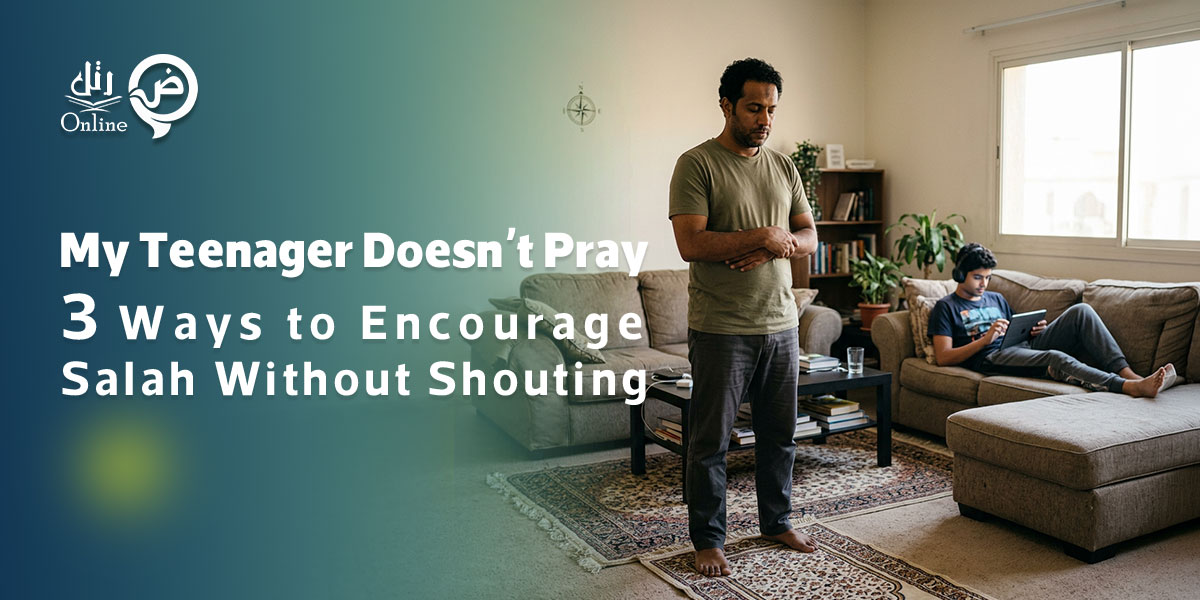
My teenager doesn’t pray. What should I do?
This is a question many Muslim parents quietly carry in their hearts, especially when gentle reminders slowly turn into shouting, and prayer becomes a daily source of tension at home.
Some parents may even start asking themselves painful questions:
Did I fail as a parent?
Is this just teenage stubbornness?
Should I be stricter, or will that push my child further away?
The truth is that encouraging a teenager to pray does not suddenly begin at the age of twelve or thirteen. It is part of a long parenting journey that needs patience, wisdom, and consistency.
But if you have already reached this stage and feel unsure what to do, here are three practical ways from Rattel School to help you encourage your teenager to pray without shouting, pressure, or daily conflict.
When children enter the teenage years, they begin searching for their identity and independence. They want to make their own choices, form their own opinions, and feel that they are no longer being treated like little children.
This is why some of the methods that worked when they were younger may no longer work now. Constant reminders, shouting, threats, or pressure may increase resistance and stubbornness, even if your teenager knows deep down that prayer is important.
If you feel disappointed, helpless, or worried, remember that this struggle is not new. Even the Prophets, peace be upon them, faced challenges when calling their children and their people to the path of truth.
So do not look at this as a complete parenting failure. Look at it as a sensitive stage that needs patience, wisdom, and the right approach.
The real question is:
There is a well-known parenting saying:
Your child will not become what you wish for them. They will become what they see in you.
If your teenager sees you praying regularly, making time for salah, and becoming calmer and more grounded through prayer, this leaves a much deeper impact than repeated lectures.
But if prayer is always mentioned at home with anger, shouting, or blame, your teenager may start to associate salah with pressure instead of peace.
When you ask about their prayer, try not to turn the conversation into an interrogation. Constant suspicion may push a teenager to lie, avoid the topic, or pray only to escape confrontation.
Instead, make prayer feel present and natural in the home. Invite them gently to pray together. Encourage them to lead the prayer sometimes. Give them a sense of responsibility and connection rather than making them feel watched and accused.
A calm home environment can make prayer feel like a safe space, not a battlefield.
Imagine someone constantly telling you that you will be punished if you do not do something. How would that make you feel?
You might feel afraid, angry, or even pushed away.
This is why your conversations with your teenager about prayer should not be limited to fear, punishment, or warnings. Do not make frightening stories the only tool you use to convince them.
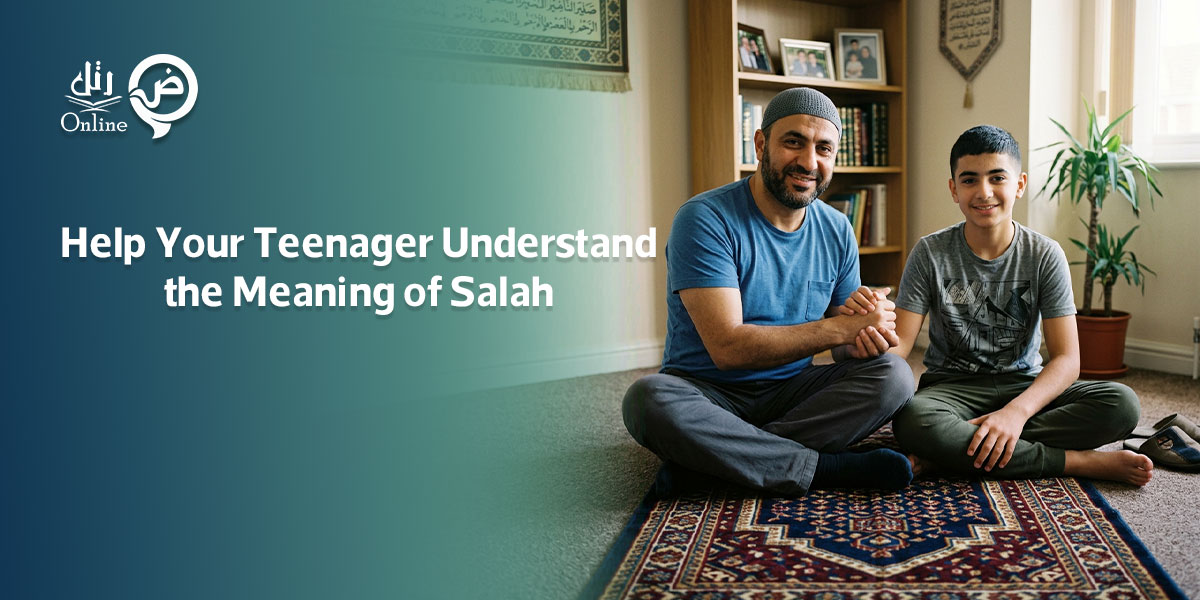
Instead, help your teenager understand the meaning of salah.
Talk to them about the peace prayer brings to the heart. Explain that prayer is not just a duty, but a personal connection with Allah. It is a moment to pause, breathe, ask, thank, and return to the One who knows us better than anyone else.
Ask questions such as:
Why do we pray?
Why is salah the first thing a person will be asked about?
How can prayer help us when life feels heavy or confusing?
Teenagers often need meaning before they commit to behavior. They want to understand, not only obey.
This is why calm reminders and consistent encouragement are often more effective than anger.
A simple sentence like:
“I was really happy when I saw you praying today.”
may leave a stronger impact than a long lecture.
No matter how much effort we put into advising, guiding, and encouraging our children, guidance ultimately belongs to Allah alone.
That is why dua should not be something we make only when the situation becomes difficult. It should be part of our daily parenting.
Keep repeating the dua:
﴿رَبِّ اجْعَلْنِي مُقِيمَ الصَّلَاةِ وَمِنْ ذُرِّيَّتِي رَبَّنَا وَتَقَبَّلْ دُعَاءِ﴾
“My Lord, make me an establisher of prayer, and from my descendants. Our Lord, and accept my supplication.”
Ask Allah to open your child’s heart to prayer, to make salah beloved to them, and to help them become among those who guard their prayers.
Many young people change completely because of a sincere dua made by a mother or father. And many closed doors are opened by a prayer whispered in the last part of the night.
Do your part with patience, wisdom, and love, then leave the hearts in the hands of Allah.
The real goal is not only that your teenager prays once because you reminded them.
The deeper goal is that they build a lifelong relationship with salah.
At Rattel, we understand that teenagers at this stage need someone who understands them, not someone who constantly attacks or blames them. We believe that building a young Muslim’s relationship with prayer requires a calm educational environment, a wise approach, and language that suits their age and way of thinking.
That is why we designed the Islamic Studies Program at Rattel to help children and teenagers understand their religion in a way that is simple, meaningful, and connected to their daily lives.
Through the program, your teenager can gain:
✔ A clear and simple understanding of the meaning and importance of prayer
✔ A supportive environment that encourages consistency
✔ Qualified teachers who understand the teenage stage
✔ A teaching style that speaks to young people in a language close to their reality
Because our goal is not only for your teenager to pray out of fear.
Our goal is for them to love prayer, find peace in it, feel close to Allah through it, and protect it with conviction that comes from the heart.
Do not leave them completely, but avoid turning every reminder into shouting or daily pressure. Continue guiding them calmly, be a good role model, and make a sincere dua for them.
The five daily prayers are obligatory for every Muslim who has reached puberty. School, homework, or a busy schedule do not remove the obligation of prayer. However, parents should help their teenager learn how to manage prayer times wisely and practically throughout the school day.
Yes. Good friends and a positive environment can greatly help teenagers stay connected to prayer and perform it on time. This is why a supportive Islamic environment can make a real difference in a teenager’s spiritual growth.